
Blog Introduction / Core Strength & Balance
Introduction to My Truly Fit Blog
Hi, welcome to my blog! Hopefully, this blog will help answer questions you may have about movement, exercise, healthy aging, healing from various physical injuries, limitations, and surgeries. I will include blog posts on managing and limiting physical pain, ancient and current healing modalities, and research on the latest movement and nutritional science.
Future blog posts will highlight tips and ideas about staying healthy as we navigate changes to our climate and the chemicals in our air, soil, water, and food.
Because Truly Fit is about being “truly” fit in mind, body, and spirit, this blog will also cover ways to clear and balance your mind, and calm and enliven your spirit. I hope each of you gains something positive from reading the posts and incorporating their tips, information, and exercise/movement ideas.
I decided to begin my blog by covering the topic of balance because falls in people over the age of 65 have become an epidemic and are costly and preventable. According to the Centers for Disease Control and Prevention, falls are the leading cause of fatal and non-fatal injury among older adults. 1 in 4 people, or 14 million, fall in the United States every year.
There are many components to fall prevention, but balance is one of the key aspects. The blog posts that follow cover the factors that influence balance, explain how each factor affects it, and provide tips, ideas, and exercises to help improve balance. I hope they are beneficial to you!
Yours in true fitness,
Karen
Core Strength & Balance
When it comes to maintaining stability and an upright steady posture, the strength of your core plays a crucial role. A strong core isnt just about sculpted abs, it is the foundation for balance, prevention of falls, and coordinating weight distribution between your trunk and limbs. It creates safe and fluid motion in standing, walking, or rising from a chair. A well-developed core is key for supporting function in daily life and reduces injuries in sports, exercise, and activities of daily living.
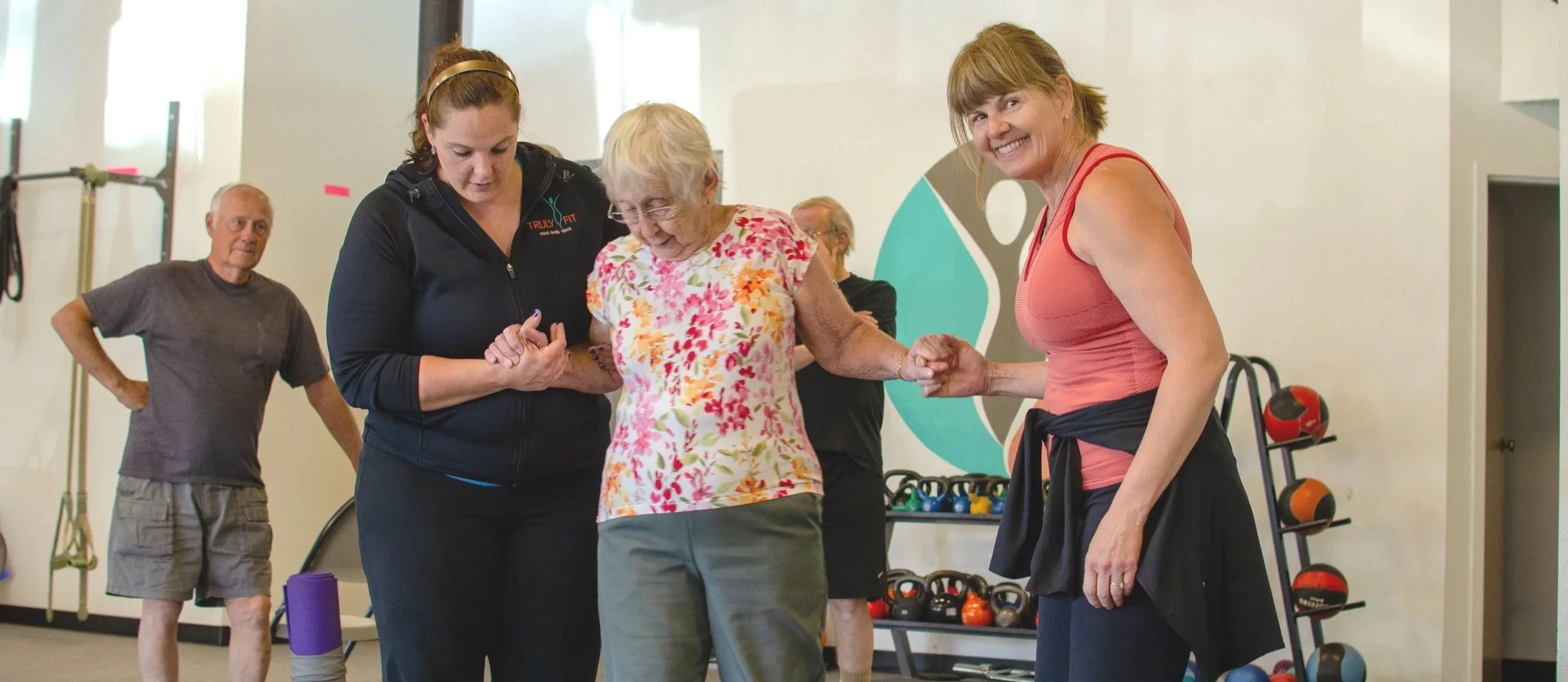
“Building core strength isn’t just for athletes or fitness enthusiasts. It’s an essential part of health at every age.”
A weak core can lead to poor posture, poor coordination in the weight transfer between the trunk and lower body, lower back pain and function, and instability when walking, climbing stairs, getting up from a chair, or playing a sport. Core weakness and instability contribute to poor posture, increased injuries and an escalated fall risk.
Building core strength isn’t just for athletes or fitness enthusiasts. It’s an essential part of health at every age. Core strength prevents injuries to the back and lower body extremities, reduces fall risk, and improves function and independence across your lifespan. By focusing on your core, you can enhance your balance, stability, and confidence in everything you do from walking your dog to participating in a strenuous sport.
Exercise and Movement Ideas for Strengthening Your Core:
Engage in Core Exercises: Planks, bridges, abdominal bracing, and back extension work are highly effective for strengthening your core. These exercises help you build muscle endurance and stability and can lead to noticeable improvements in your steadiness, balance and everyday function.
Farmer Walking: Pick up weights, cans of food, jugs of water, or a heavy object (not too heavy), stand up tall and carry the weight/s as you walk around your house, the gym, or your yard. You can carry the weight in front of your chest, down by your sides, off set one in front of a shoulder and the other one by your side. Start with 60 seconds and work your way up to 2 or more minutes.
Wall sitting: Pretend you are sitting in a chair but sit leaning your back from tail bone to neck on a wall with legs shaped like you are sitting in a chair. Make sure your ankles are directly under your knees and not tucked behind them because this can put undue stress on the knees. If you’re not quite strong enough to bend your hips and your knees to a 90-degree angle increase the angle of your hip and knee. If you feel you may fall, place a chair next to you to grab onto if you feel unsteady. Hold for 15 seconds and work your way up to 60 seconds or more. You can also hold weights at your sides or out in front of your chest to increase the intensity. This exercise is excellent for core and lower body strength and integration and as a bonus, it also has been shown to lower blood pressure.
A Variety of Movement: Incorporating daily exercise, such as walking, yoga, or Pilates, not only strengthens your core but also supports overall balance and function. Consistency is the key. Make movement and exercise a regular part of your life to reap lasting benefits.